

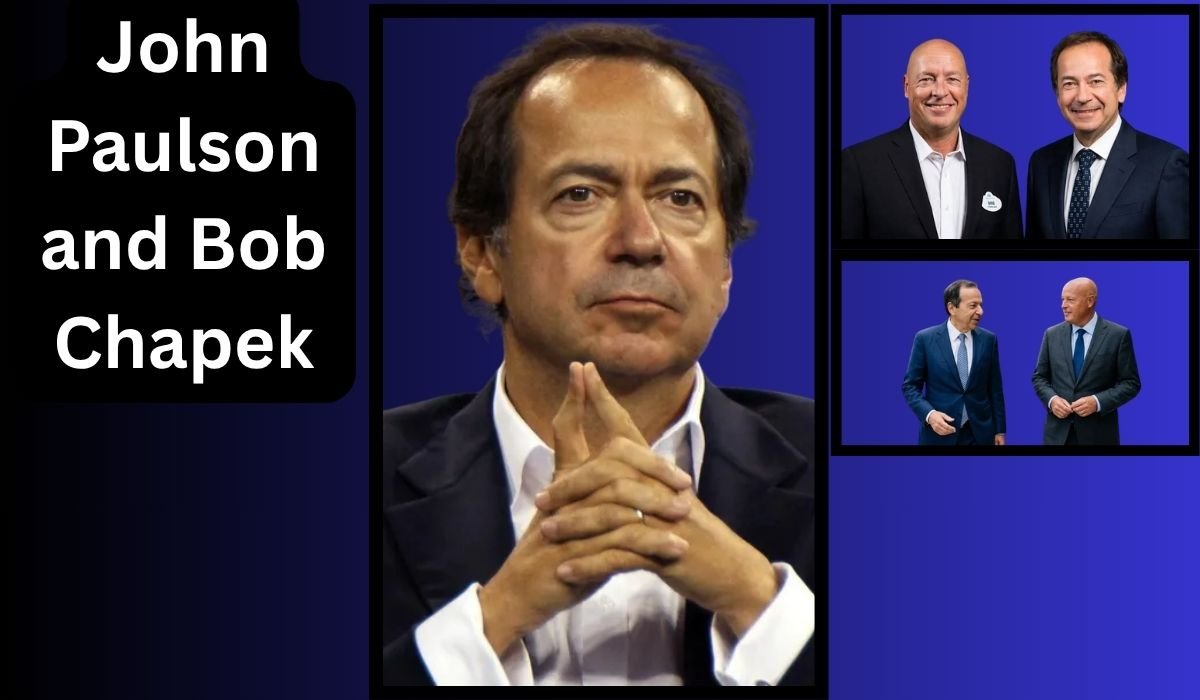
John Paulson and Bob Chapek are two famous names from American business, yet their stories barely overlap. One built a fortune by betting on markets. The other climbed through a giant entertainment company. Their different paths to business leadership make a useful lesson for anyone who manages people, money, or systems.
This article looks at how each man made decisions, handled risk, and shaped a business. We’ll also borrow ideas from cloud architecture, because good infrastructure and good leadership share the same habits: plan early, watch costs, and protect what matters. You’ll also see where their stories differ.
Who Are John Paulson and Bob Chapek?
John Paulson is a New York investor who ran a hedge fund and made one famous trade. Bob Chapek spent nearly thirty years inside Disney before becoming its boss. It’s a hedge fund manager vs Disney CEO story.
So, did John Paulson and Bob Chapek work together? Not as far as public records show. They worked in different industries, and no known business partnership connects them. Any comparison here is about style, not shared history.
- Paulson is an investor and firm founder who took market risk with his own reputation on the line.
- Chapek is a career executive who rose through one large company, step by step.
- Paulson worked mainly with money, while Chapek worked with parks, products, and streaming.
- Chapek led a workforce of well over one hundred thousand people during his time as CEO.
| Topic | John Paulson | Bob Chapek |
|---|---|---|
| Main role | Investor and firm founder | Disney executive, later CEO |
| Industry | Finance and investing | Entertainment, parks, and media |
| Known for | The 2007 mortgage trade | Running Disney from 2020 to 2022 |
| Leadership base | His own firm | A large public company |
| Decision style | Concentrated, researched bets | Broad planning across many units |
Read More: Miguel Patricio and Albert Bourla: Powerful Business Leaders Shaping Global Industries in 2026
Leadership Lessons for Modern Organizations
The best leadership lessons from business leaders come from studying how they decide. Leadership styles compared here show one person who picks a few big bets and another who manages many moving parts at once.
Both paths demand adaptability in leadership and clear thinking during decision-making under uncertainty. Neither role ever offers perfect information, so judgment, timing, and honest review matter more than any single tidy plan.
- Know what you’re betting on, and be able to explain why in plain words.
- Check your assumptions when the market, the customer, or the technology changes.
- Build teams that can act without waiting for your approval on every small thing.
- Here’s what what cloud architects can learn from business leaders: plan for failure, track costs, and keep the goal visible.
Bob Chapek’s Long Disney Career
The Bob Chapek career began at Disney in 1993 in home entertainment marketing. He later led Disney Consumer Products and then moved to Disney Parks Experiences and Products, the division that produced much of the company’s profit.
The Bob Chapek Disney CEO era began in February 2020, a planned Bob Iger succession. The Disney CEO 2020 role started in crisis, because the pandemic shut parks within weeks. The board replaced him in November 2022, and Iger returned.
- He started in marketing, so he learned the customer side of Disney early.
- His Bob Chapek Disney Parks work included the 2016 opening of Shanghai Disney Resort.
- The Disney Cruise Line expansion was part of the growth plan he helped oversee.
- His time as CEO was short, and critics often pointed to pay, politics, and pace.
| Stage | Role area | Why it mattered |
|---|---|---|
| 1993 | Joined Disney in marketing | He learned how families buy and watch Disney products |
| Mid career | Consumer products leader | He managed licensing, toys, and merchandise at scale |
| Later years | Parks and resorts leader | He ran the company’s biggest profit engine |
| 2020 | Named CEO | He led through a global shutdown of travel and parks |
| 2022 | Exit as CEO | The board brought back Bob Iger to change direction |
Digital Transformation and the Importance of Adaptability
During his time as CEO, Disney direct-to-consumer growth became a central goal. Disney+ grew quickly, and Chapek pushed the company to organize around distribution, not only around the studios that made the content.
That shift was a real digital transformation, and it tested him. Parks, studios, and apps all had to work together, which meant strong cross-business coordination. Some creative leaders felt the change moved too quickly.
- Disney+ passed 100 million subscribers in 2021, a very fast climb for a new service.
- A 2020 reorganization put distribution decisions under one leader and changed how teams worked.
- Streaming costs weighed on results, which showed the price of fast growth.
- Speed helps only when the people doing the work believe in the plan.
John Paulson’s Investment-Focused Leadership Model
The John Paulson career started on Wall Street, including time at Bear Stearns, before he launched Paulson & Co. in 1994. The John Paulson hedge fund grew into one of the largest in the world.
His John Paulson investment strategy leaned on event-driven investing, where mergers and restructurings create price gaps. As a founder, his results were his own, a clear founder vs corporate executive contrast.
- He used alternative investment strategies that went beyond simple stock picking.
- He liked credit and restructuring investing, which means studying troubled companies and their debt.
- He paid close attention to capital allocation, putting money only where the payoff looked strong.
- Paulson & Co. later moved toward managing mostly his own wealth.
John Paulson Big Short
The 2008 financial crisis housing bet made him famous. Paulson argued that subprime mortgage bonds were mispriced, and he bought protection against them before home prices began to fall in 2007.
The trade worked because his downside exposure was limited to the cost of that protection, while the payoff was huge. That’s risk-adjusted decision-making in plain terms: small known loss, large possible gain.
- His firm earned about 15 billion dollars from the trade, and he personally made roughly 4 billion.
- The film The Big Short focused mostly on other investors, not Paulson.
- Gregory Zuckerman’s book The Greatest Trade Ever tells Paulson’s story in detail.
- His later gold bets lost money, which proves that one great trade isn’t a system.
John Paulson Billionaire and Net Worth
Paulson became a billionaire after the housing trade. Net worth estimates differ by source and year, but Forbes has often placed him in the low billions, and the figure moves with markets.
He also gave large gifts. In 2015, he pledged 400 million dollars to Harvard’s engineering school, which now carries his name. He earlier gave 100 million dollars to the Central Park Conservancy.
- His wealth came from concentrated bets, not from a steady salary.
- Net worth changes often, so check current Forbes or Bloomberg figures.
- Harvard’s engineering school bears his name after the 2015 gift.
- His Central Park Conservancy gift helped fund park upkeep and improvements.
John Paulson Age
John Paulson was born on December 14, 1955, in Queens, New York. As of October 2026, he is 70 years old, and he turns 71 in December.
He studied finance at NYU and earned an MBA from Harvard Business School. He then worked in consulting and deal advice before starting his own fund. Those early years shaped his taste for deals and risk.
- He was born in Queens, New York, in 1955.
- He studied at NYU and Harvard Business School.
- He started his firm at age 38, after years of Wall Street experience.
- He stays active in philanthropy and public life.
John Paulson and Donald Trump
Paulson advised Donald Trump’s 2016 presidential campaign on economic policy. He was later mentioned in news reports as a possible Treasury pick, but he did not get the job.
Public reports say he has remained a supporter and donor in later campaigns. Political ties can open doors, yet they also add reputation risk for any business leader, whatever the party.
- He served as an economic adviser during the 2016 campaign.
- He was discussed for a cabinet role but was never named.
- News outlets have reported his later political support and donations.
- The lesson is simple: political links add visibility, and visibility adds risk.
John Paulson’s Family: Jenny Paulson, Ex-Wife, and New Wife
Jenny Paulson was John Paulson’s wife for many years. Their divorce drew wide press coverage, and she’s now described as his ex-wife in most reports. Paulson has since remarried.
Family details change, so check recent, reliable news for the latest facts. Private life tells us little about leadership skill, so it’s best to keep the focus on how each man ran his business.
- Divorce news is public, but it says little about investing ability.
- Reports on his remarriage vary, so verify them with current sources.
- Wealthy families often manage assets through private family offices.
- Professional choices explain his career better than personal headlines do.
What Their Careers Teach About Cloud Architecture
Here’s the bridge idea. Cloud architecture is how a company designs its computing systems, much like a leader designs a company. In enterprise cloud architecture, every choice affects speed, safety, and cost.
A good enterprise cloud platform is about matching infrastructure to business value, so spending follows real need. Paulson did that with money, and Chapek had to do it with parks, products, and streaming.
- Paulson put capital where the payoff looked largest.
- Chapek tried to connect many business units around shared systems.
- Cloud teams should choose tools by what the business actually needs.
- All three groups need a plan for what could go wrong.
| Leadership habit | Business example | Cloud parallel |
|---|---|---|
| Concentrated bets | Paulson’s mortgage trade | Spending on the few services that drive revenue |
| Coordinating units | Chapek’s Disney reorganization | Shared platform teams across products |
| Planning for downside | Limited loss, large possible gain | Backups, failover, and recovery drills |
| Adapting fast | The shift toward streaming | Moving workloads when needs change |
Scalability: From Investment Capital to Global Entertainment
Cloud scalability means a system grows with demand. Think of Disney+ launch day, when millions signed up, or a park website during a holiday rush. Distributed systems spread that load across many machines.
Auto-scaling adds capacity when traffic jumps and removes it later. Organizational scalability asks a matching question: can teams, rules, and decisions grow without slowing everything down?
- A content delivery network serves video and images from places near viewers.
- Object storage holds huge media libraries at a low cost.
- Paulson’s firm grew from a small start to tens of billions in assets.
- Chapek’s Disney needed systems for parks, apps, and streaming at the same time.
Security and Risk Management
Risk management in cloud architecture starts by assuming something will fail or be attacked. Cloud security protects data, customers, and trust, much like Paulson limited his losses before chasing big gains.
Zero-trust security checks every request, and identity and access management decides who gets in. With least-privilege access, people reach only what they need, which shrinks the damage from any single mistake.
- Network segmentation limits how far a breach can spread.
- Centralized logging shows who did what, and when.
- Encryption protects data both in storage and while it moves.
- Vulnerability management finds and fixes known weaknesses before attackers do.
Cost Optimization and Business Efficiency
Cloud cost optimization means paying only for value you use. Idle servers are like cash sitting still. FinOps brings finance and engineering together so both sides see the bill and agree on priorities.
Efficiency matters in big companies too. Disney’s streaming push showed how fast costs can climb when growth comes first. Paulson, by contrast, weighed cost against payoff on every trade he made.
- Tag resources so each team can see its own spending.
- Turn off unused servers and test environments.
- Observability and governance give leaders a clear view of usage and rules.
- Review contracts and storage tiers every quarter.
John Paulson and Bob Chapek: A Practical Comparison
In John Paulson vs Bob Chapek, the biggest difference is ownership. Paulson answered to his investors and himself. Chapek answered to a board, shareholders, and a very large workforce, with every decision watched in public.
Seen as investor vs corporate executive, one chose a few high conviction bets, and the other balanced parks, products, and streaming. Neither path is better. They suit different jobs, different risks, and different kinds of people.
- Paulson’s biggest win came from one major call.
- Chapek’s tenure was judged on hundreds of calls across many units.
- Paulson reported to investors, while Chapek reported to a board.
- Both men show why leaders should check their assumptions often.
| Factor | John Paulson | Bob Chapek |
|---|---|---|
| Source of authority | Founder and owner | Board appointed CEO |
| Risk style | Concentrated and hedged bets | Broad operational risk |
| Time horizon | Trade driven, often shorter | Multi year company plans |
| Biggest win | The 2007 mortgage trade | Parks growth and Disney+ scale |
| Biggest challenge | Later gold bets that lost money | Criticism and an early exit |
Future Trends in Business and Cloud Architecture
Cloud systems are moving closer to users. Edge computing processes data near devices, which helps streaming, park apps, and trading tools. Hybrid and multicloud setups let companies avoid depending on one provider for everything.
Rules are growing too. Companies must meet regulatory obligations on data, privacy, and finance. Leaders who plan early, as both men did in their own ways, will handle these changes better than those who wait.
- Edge sites will serve live events and fast apps more often.
- Security checks will move earlier into design and testing.
- Cost tracking will become a daily habit, not a yearly review.
- Leaders will need both investor discipline and operator skill.
FAQs
Did John Paulson and Bob Chapek work together?
No public record shows any partnership between them. They worked in different industries, so this comparison is about style and decisions, not shared history.
What is John Paulson best known for?
He is best known for his 2007 bet against subprime mortgages. The trade made his firm billions and turned him into a billionaire.
How long was Bob Chapek the Disney CEO?
He became CEO in February 2020 and left in November 2022. Bob Iger returned to lead the company afterward.
What can cloud architects learn from business leaders?
They can learn to plan for failure, match spending to real value, and adapt when conditions change. Good leaders and good systems both need those habits.
Which leadership path is better, investor or corporate executive?
Neither is better. An investor relies on a few strong bets, while an executive balances many units, and each path suits different people and risks.
Conclusion
John Paulson and Bob Chapek show that success has more than one shape. Paulson made a few concentrated bets and limited his downside. Chapek managed parks, products, and streaming under public pressure.
Both paths teach the same core lessons. Check your assumptions, control costs, and prepare for things going wrong. Whether you run a fund, a company, or a cloud platform, these habits help you decide well when the future is unclear.

Noah Evans is a content writer who creates clear, informative, and engaging articles on a variety of topics. He is dedicated to providing accurate and valuable information for readers.