
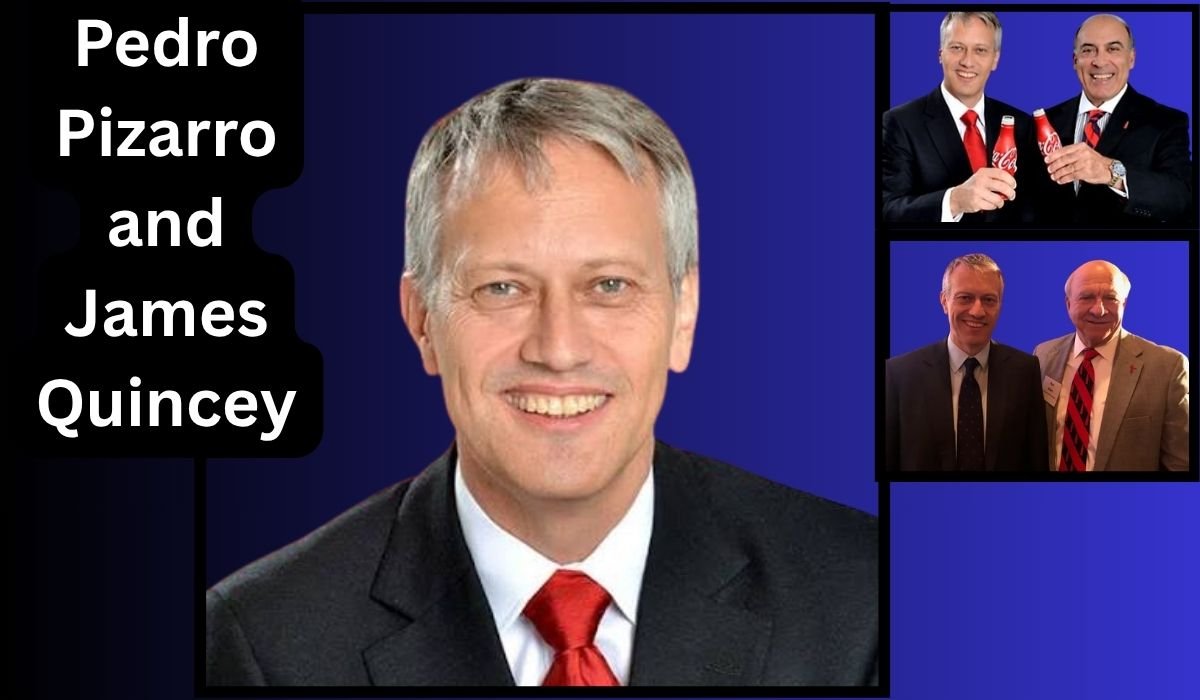
Two leaders, two very different companies, and one question many readers keep asking. How do Pedro Pizarro and James Quincey compare? One runs a California power utility. The other guided the world’s biggest soft drink maker. This guide covers their backgrounds, pay, strategy, and the lessons their careers can offer.
We rely on public filings and company statements, and we explain the numbers in plain English. Net worth figures here are estimates, because executives rarely share their total wealth. Expect facts, simple tables, and real case studies you can use yourself. Everything is written for busy readers who want clear answers.
Pedro Pizarro and James Quincey at a Glance
Searches for Pedro Pizarro vs James Quincey usually start with curiosity about money and power. The Coca-Cola CEO vs Edison International CEO question is really about two careers built on trust.
People also want to compare CEO net worth, so we cover that too. First, here is a quick snapshot of who they are today.
- Pizarro still leads Edison
- Quincey moved to the chair in 2026
- Both face constant public scrutiny
| Item | Pedro Pizarro | James Quincey |
|---|---|---|
| Background | Chemistry scientist | Career company insider |
| Top job start | 2016 | 2017 |
| 2026 status | Edison CEO | Executive chairman |
| Public focus | Grid safety and energy policy | Brand growth and portfolio |
Read More: Albert Bourla and Miguel Patricio : Comparing Two Remarkable Global Leadership Careers
Who Is Pedro Pizarro? Leading an Energy Transformation
So, who is Pedro Pizarro? He is a scientist turned executive who steers one of America’s biggest power companies. The Pedro Pizarro Edison International CEO role puts him at the center of energy debates.
He also serves on the 3M board and as a Caltech trustee. That mix of science, business, and public service shapes how he explains grid problems: plainly and with data.
- Scientist by training
- Utility leader by experience
- Public voice on energy policy
Pedro Pizarro Biography: Scientist Turned Utility Chief
This Pedro Pizarro biography starts with unusual Pedro Pizarro education: a Harvard chemistry degree and a Caltech Ph.D. Few utility chiefs begin their careers in a lab.
His McKinsey background taught him to break big problems into small parts. He later became Edison Mission Energy president, then moved to the utility side at Southern California Edison.
- Lab training came first
- Consulting years came next
- Power generation led to utilities
Pedro Pizarro’s Net Worth: The Edison Side
Any Pedro Pizarro net worth number is an estimate, since nobody publishes it. Public proxy filings show the pieces, including Pedro Pizarro salary, bonuses, and Edison shares owned.
Check Edison International CEO pay and Pedro Pizarro compensation 2025 in the latest report. Those filings also list the CEO pay ratio median employee figure, which draws attention every year.
- Salary is usually the smaller slice
- Equity grants usually make up the largest part
- Executive pay and Eaton Fire criticism grew in 2025
Edison’s Financial Snapshot
Edison International earnings come from a regulated electric utility model. As an investor-owned utility, Edison earns returns approved in rate cases, so regulators matter as much as markets.
Watch core earnings per share when reading Edison International earnings 2026 updates. Management has pointed to a long-term EPS growth target of 5% to 7%, which shapes the Edison International stock outlook.
- Regulators set allowed returns
- Wildfire costs can swing results
- Growth depends on grid spending
| Item | Why it matters |
|---|---|
| Core EPS | Strips out one-time items |
| Rate cases | Set what Edison can earn |
| Growth target | 5% to 7% a year |
| Outlook | Depends on wildfire costs and approvals |
Who Is James Quincey? Leading a Global Consumer Brand
Who is James Quincey? He is the executive who ran Coca-Cola for nearly nine years. The James Quincey Coca-Cola CEO era ran from 2017 until early 2026.
Many readers ask, is James Quincey still CEO of Coca-Cola? No. He handed over the title on schedule, but he stays involved as chairman.
- Brand builder at heart
- Global operator
- Still guiding the board
James Quincey Biography: From Career Insider to CEO
This James Quincey biography is a classic insider story. He is a longtime Coca-Cola insider, joining in 1996 and rising through Mexico, Europe, and the operating chief role.
Readers often check James Quincey age. He was born in 1965, so he is about 61 today. Experience, not youth, defined his tenure.
- Joined Coke in 1996
- Became CEO in 2017
- Chairman since 2019
James Quincey’s Net Worth: The Coke Side
A James Quincey net worth figure is only an estimate. For James Quincey net worth 2026, treat online numbers carefully, because the SEC proxy statement shows pay and holdings, not total wealth.
People ask how much does the Coca-Cola CEO make. Coca-Cola CEO compensation has often been reported above $20 million, and James Quincey salary is only a small share.
- Stock awards and stock options form most of the pay
- Coca-Cola shares owned add to long term wealth
- In-the-money options carry paper gains
- Read the executive compensation breakdown for details
The “Total Beverage Company” Strategy
The Coca-Cola total beverage company strategy moved the firm beyond cola. The Coca-Cola brand portfolio now spans coffee, sports drinks, dairy, and water, with the Costa Coffee, BodyArmor, fairlife acquisitions widening the lineup.
Coke now counts many billion-dollar brands. It also tested Coca-Cola alcohol partnerships, such as Jack & Coke and Topo Chico Hard Seltzer, to reach adult drinkers.
- Coffee and tea
- Sports drinks
- Premium dairy
Case Study: Cutting the Brand List to Grow Faster
In 2020, Coca-Cola cutting brands, Tab discontinued made headlines, as the company dropped a large share of its smaller labels.
This prune to grow strategy freed money and focus for winners. Weak sellers had been eating shelf space, staff time, and ad budgets.
- Focus on best sellers
- Free up marketing money
- Speed up decisions
The 2026 Handoff
Fans of clean transitions liked this one. The CEO handoff March 31, 2026 was a planned internal succession, announced months ahead.
So who replaced James Quincey? Henrique Braun, the former operating chief, now holds the Henrique Braun CEO title, while James Quincey executive chairman status keeps his experience close.
- Announced well in advance
- Insider with global experience
- Quincey advises from the chair
Coca-Cola’s Financial Scorecard Under Quincey
Coca-Cola financial results 2025 showed steady strength. Coca-Cola organic revenue growth came from price, mix, and volume, and Coca-Cola zero sugar growth stayed a bright spot.
Investors also track comparable operating margin, free cash flow, and earnings per share. Exact figures sit in the company’s earnings releases.
- Pricing helped sales
- Zero Sugar kept gaining fans
- Cash flow funded dividends
| Metric | What it tells you |
|---|---|
| Organic revenue growth | Sales growth without currency and deals |
| Zero Sugar | Momentum of low sugar cola |
| Operating margin | Profit from core operations |
| Cash flow | Cash left after investment |
Modernizing the Electric Grid
Grid modernization means upgrading wires, poles, sensors, and software so power stays safe and steady. It sounds technical, but it affects every light switch.
Edison has pointed to Southern California Edison rate cuts as proof that upgrades and affordability can coexist. Customers care about both safety and the monthly bill.
- Reported customer rates, residential and small business cuts
- Safety and reliability spending stays high
- Aging equipment gets replaced
Hardening Against Wildfire
People ask how utilities prevent wildfires. SCE wildfire mitigation includes grid hardening, such as hardened distribution lines in high fire risk areas.
Tools include covered conductor, which wraps wires in insulation, and undergrounding power lines where it makes sense. Public safety power shutoffs cut power during extreme winds.
- Insulated wires cut spark risk
- Stronger poles resist wind
- Shutoffs are a last resort
Case Study: The Eaton Fire Response
The Eaton Fire Southern California Edison story began in January 2025, when flames tore through Altadena and nearby areas. Investigators have looked closely at an idle line.
Edison launched the Wildfire Recovery Compensation Program to pay eligible victims faster than court cases. It now also talks about idle line grounding as a safety step.
- Debate over wildfire liability utilities face continues
- A wildfire fund California lawmakers created backs up claims
- Faster payouts matter to families
Permitting: The Hidden Bottleneck
New lines and substations can take years to approve. Permitting reform energy advocates say faster reviews would help utilities build what customers need.
Siting and permitting delays raise costs and slow clean power hookups. Utility leaders, Pizarro among them, have called for quicker, clearer approvals.
- Reviews can take years
- Delays raise costs
- Clear rules speed projects
Digital Transformation and Business Adaptation
Coca-Cola digital transformation touched sales, marketing, and machines. Under Quincey, the company treated customer data as a daily tool, not a side project.
Online ordering and Coca-Cola e-commerce partnerships helped reach shoppers who skip stores. The goal was simple: be wherever people choose a drink.
- Better data on shoppers
- Online orders for retailers
- Smarter machines
Steering Through the Pandemic
Restaurants, cinemas, and stadiums closed in 2020, and away-from-home sales COVID-19 losses hit Coke hard. Quincey cut costs and shifted focus to drinks people buy for home.
That groundwork supported Coca-Cola pandemic recovery once venues reopened. Early cost work and a leaner brand list helped the rebound.
- Venues closed fast
- The brand list got trimmed
- Sales rebounded as places reopened
Data, Dispensers, and AI Marketing
Coca-Cola Freestyle smart dispensers let people mix flavors and give Coke useful taste data. Coca-Cola Creations limited editions use buzz to bring new flavors to younger fans.
Coca-Cola AI marketing now helps create ads and test ideas faster. Human teams still review and approve the final work.
- Freestyle shows flavor trends
- Limited drops create buzz
- AI speeds up creative tests
Case Study: Learning From a Mixed Reaction
Coke’s AI made holiday ads drew praise for polish but also criticism for feeling cold. The AI-generated holiday ad reaction was loud online.
The lesson is simple. New tools can save time, but audiences still want warmth and a human touch.
- Speed is not enough
- Fans notice shortcuts
- Test ideas before launch
Clean Energy and Electrification
Electrification means using electricity instead of gas or gasoline for cars, homes, and factories. California aims for clean electricity by 2045, and Edison says that goal needs a stronger grid.
The hard part is balance. Customers want clean power, yet they worry about affordability, electricity rates, and what upgrades will cost them.
- Cars, homes, and factories switch over
- The grid must grow
- Bills must stay fair
What Electrification Means for You
If you wonder what does electrification mean for homeowners, think new appliances. Heat pumps warm and cool homes, and electric vehicles charge in your garage.
Upfront costs can be high, but running costs may fall over time. Check local rebates and your rate plan before buying.
- Heat pumps replace furnaces
- EV charging adds home load
- Rebates may lower costs
The Data Center Wave
Data centers power demand is rising fast across the country. AI power demand adds to the surge, and utilities must plan new capacity years ahead.
That drives load growth and raises worries about peak demand, the hours when everyone plugs in at once. Edison says grid upgrades must keep pace.
- Servers run all day
- Utilities need new lines
- Costs must be shared fairly
Sustainability in the Beverage Industry
Sustainability in the beverage industry covers plastic, water, and climate. Few brands feel the pressure like Coke, which sells billions of bottles and cans.
Coca-Cola sustainability goals have shifted over time. Some were reset, and some stayed firm.
- Plastic waste
- Water use
- Carbon emissions
The Packaging Goals Reset
Coke’s World Without Waste program once promised more by 2030. In late 2024, the company pushed its Coca-Cola recycled packaging goals 2035 timeline.
The new recycled content target 35% to 40% is lower than before, and the packaging collection rate goal changed too. Some critics call it a retreat.
- Deadline moved to 2035
- Lower recycled share
- Mixed public reaction
Where Coke Held Firm
Coke kept its push for refillable packaging, which cuts waste by reusing bottles. Its Coca-Cola water replenishment goal also stayed, with focus on high-risk water locations.
The company also said its emissions plan stays tied to a 1.5°C climate pathway. Progress reports show how well these promises hold up.
- Reuse over recycling
- Water returned to communities
- Climate target kept
Why It Matters
Packaging and water decisions affect cost, regulation, and brand trust. Shoppers and investors watch the gap between promise and action.
A realistic goal can build more trust than a bold one that slips. The same logic applies to any company.
- Honesty builds trust
- Plastic rules are tightening
- Investors track targets
Two Industries, Similar Leadership Challenges for Pedro Pizarro and James Quincey
Beverage industry vs utility industry leadership looks like apples and oranges. Yet both jobs mean guarding trust, managing regulation, and planning years ahead.
The best leadership lessons from CEOs often come from such overlaps. Both leaders face public scrutiny every single year.
- Trust is vital
- Rules shape strategy
- Planning cycles are long
Side-by-Side Comparison
A direct Coca-Cola vs Edison International look shows big contrasts in customers, risks, and growth. One sells drinks, the other sells power.
The table below sums up the main points for quick reading.
- Different customers
- Different risks
- Different growth paths
| Topic | Edison International | Coca-Cola |
|---|---|---|
| Leader in 2026 | Pedro Pizarro, CEO | Henrique Braun, CEO |
| Main risk | Wildfire liability | Changing tastes and sugar rules |
| Pricing | Set by regulators | Set by the market |
| Growth lever | Grid upgrades and load growth | Brand portfolio |
Shared Challenges
These shared leadership challenges begin with public trust. A wildfire or a packaging scandal can hurt a reputation overnight.
Both leaders also balance short term earnings against long term investment. Both answer to boards, regulators, and shareholders.
- Reputation risk
- Heavy regulation
- Investor patience
A Key Difference
Pizarro works where regulators set prices. Quincey worked where shoppers can switch brands in seconds.
That means Pizarro negotiates, while Quincey competes. Each skill set suits a different market.
- Regulated versus open markets
- Slow versus fast feedback
- Different risk tolerance
Leadership Through Change
How to lead through a crisis matters for both men. Pizarro faced fire, and Quincey faced a pandemic.
Their responses differ, yet both leaned on clear plans and steady messages. Calm leadership gave staff something to follow.
- Stay calm
- Share facts
- Act fast
Pizarro’s Style: Engineer the Problem
Pizarro talks like a scientist. He frames issues, picks measurable fixes, and tracks results.
That shows in his work with the Electricity Subsector Coordinating Council, which links utilities and government on threats to the grid.
- Define the problem
- Measure progress
- The Maria Rigatti, Aaron Moss CFO transition shows planned handoffs at Edison too
Quincey’s Style: Reinvent and Hand Off
Quincey reshaped the company while staying a calm insider. He pruned brands, added categories, and prepared a successor.
That fits succession planning best practices: pick a successor early, share the plan, and stay available as a mentor.
- Reinvent early
- Choose a successor early
- Stay as a mentor
Case Study: Two Ways to Handle Criticism
How CEOs handle criticism varies. Pizarro faced anger over wildfire harm and pay, and Quincey faced backlash over plastic goals and AI ads.
Both answered with data, policy changes, and public updates. Silence rarely works.
- Own the issue
- Share the facts
- Show action
Leadership Lessons You Can Use
Curious how to plan succession? Start early, name a clear successor, and keep the handoff public.
You can also read the Coca-Cola proxy statement and Edison International investor relations pages to see how boards explain pay and strategy.
- Plan handoffs
- Cut distractions
- Own your mistakes
The Future of Their Industries
The future of the beverage industry will focus on health, sugar rules, and new flavors. Winners will balance taste with trust.
The future of the energy industry will focus on load growth, safety, and clean power. Reliable service will matter most.
- Health trends shape drinks
- Demand shapes the grid
- Trust shapes both
What Comes Next for Energy
Expect more demand from data centers, EVs, and heat pumps. Utilities will need steady approvals and fair cost sharing.
Wildfire safety will stay a top priority. Customers will watch both safety and bills.
- Grid upgrades continue
- Safety remains key
- Affordability stays in focus
What Comes Next for Beverages
Expect more low sugar drinks, coffee, and functional beverages. Coke’s new chief will carry the strategy forward.
Packaging goals will face close scrutiny. Shoppers want proof, not promises.
- Low sugar growth
- New categories
- Packaging scrutiny
What to Watch in Late 2026 and 2027
Here is what to watch in 2027: Braun’s first full year as CEO and Edison’s wildfire costs.
Rate decisions and data center demand will also shape results. Quarterly updates will show who is on track.
- Braun’s first full year
- Wildfire cost updates
- Rate decisions
FAQs
Who is Pedro Pizarro?
Pedro Pizarro is the CEO of Edison International. He studied chemistry at Harvard, earned a Ph.D. at Caltech, and worked at McKinsey before moving into energy.
Is James Quincey still CEO of Coca-Cola?
No. He handed the CEO role to Henrique Braun on March 31, 2026. Quincey now serves as executive chairman.
What is James Quincey’s net worth?
There is no official figure, so any number is an estimate. Proxy statements show his pay and holdings, but not his total wealth.
How did Coca-Cola change under Quincey?
Coke moved from a cola-focused firm to a total beverage company. It added coffee, dairy, and sports drinks, and it cut weaker brands.
What is Edison International’s biggest challenge?
Wildfire safety and liability, especially after the Eaton Fire. Edison must also keep rates fair while it upgrades the grid.
Conclusion
Pedro Pizarro and James Quincey lead in different worlds, but they share one core task: protecting public trust while planning for the long term. Pizarro works in a regulated market where safety and approvals matter most. Quincey worked in an open market where shoppers can switch brands quickly.
Their stories offer practical lessons. Plan succession early, admit mistakes, and back your goals with data. Pay and net worth figures are only estimates, so always check the latest filings. Both companies will face close scrutiny in 2026 and 2027.

Noah Evans is a content writer who creates clear, informative, and engaging articles on a variety of topics. He is dedicated to providing accurate and valuable information for readers.